Chapter 6: The Golden Hour
Chapter 6: The Golden Hour
The city was no longer a sanctuary. The bustling crowds, which had once offered the comfort of anonymity, now felt like a hunting ground teeming with shadows. Every man in a coat, every figure lingering at a street corner, was him. The Raincoat Man was no longer confined to the dark tunnels of the subway or the periphery of Sofia’s vision. He could walk in the sun. The reflection in the storefront window had proven that.
Back in her apartment, the silence was once again a living entity, thick with menace. She paced the worn floorboards, a prisoner on death row, the faint, shadowy marks around her neck a ghostly memory of the noose Brandon had offered. Her bicep throbbed with a dull ache, the deep purple handprint a permanent tattoo from a dead man. She had smashed the gateway, but the connection was already hardwired into her soul. The ghosts weren’t echoes of the machine; they were echoes of her.
A horrifying clarity cut through the fog of her fear. It was a pattern. The spirits were not random. They were specific, personal, and cruelly poetic. She wrote a lie about a peaceful hanging, and Brandon’s ghost appeared, offering her the same peace. She wrote a lie about a magical garden with flowers, and Leo’s ghost arrived to carve one into his own chest. The punishment always fit the crime. The horror was always a grotesque reflection of the comfort she sold.
So what, then, was the Raincoat Man?
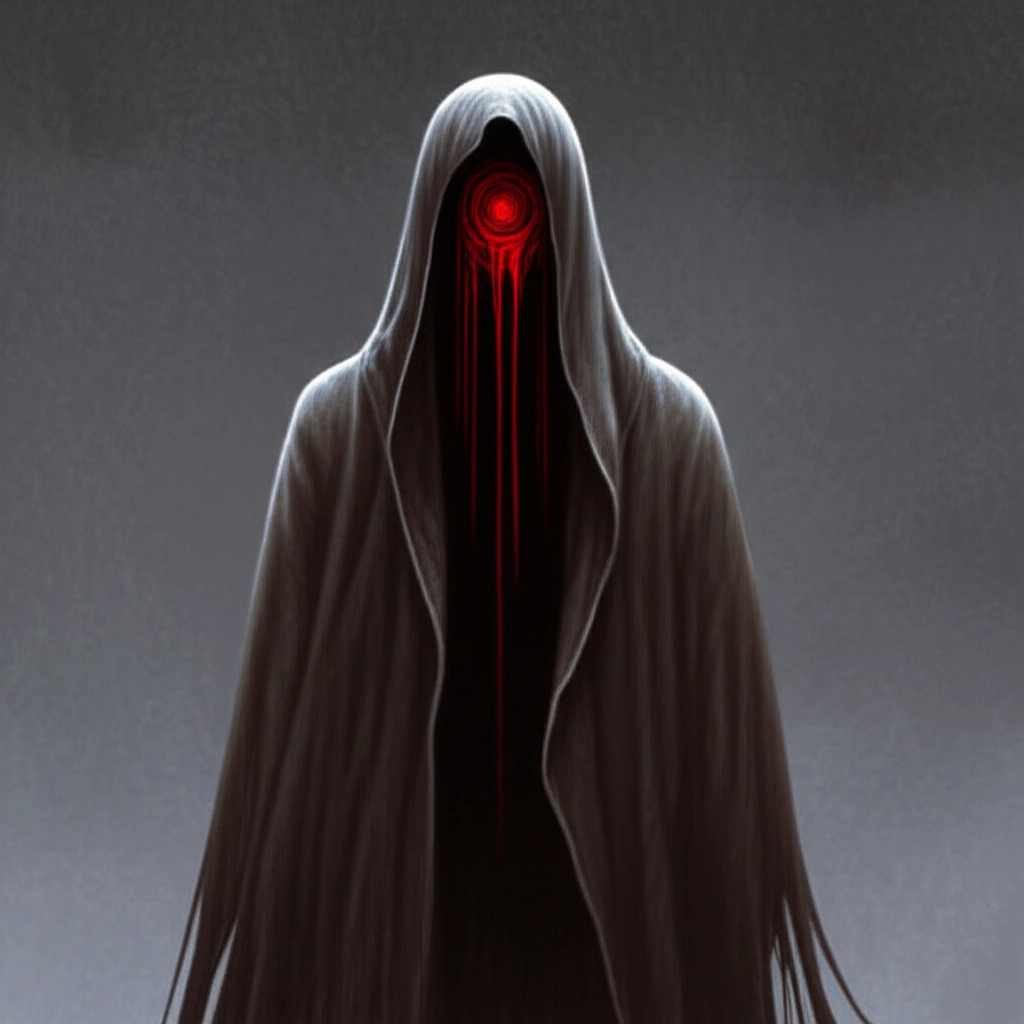
He had appeared after the M train commission, but the connection felt deeper, older. He wasn't just the ghost of Eliza. His face… that gaping, scarlet wound… it was the image that had haunted her for seven years. It was the genesis of her pain. He was the first ghost, the original echo. The specter born not from a client’s grief, but from her own.
Her entire, morbid business—this frantic, self-destructive scrabbling for money and meaning in the silence of others—had been a subconscious rehearsal. She had been practicing, honing her strange, terrible craft, all in a desperate, unwitting attempt to understand the one silence that truly mattered: her father’s.
She stopped pacing. The frantic energy drained away, replaced by a cold, terrifying resolve. Her legs felt steady for the first time in weeks. Running was useless. Hiding was impossible. Smashing the mirror had only shown her that the monster was her own reflection.
The only way out was through.
She had to face him. Not as a victim cowering on a subway platform, but as a challenger. She had to use the very power that had been destroying her, the power to give a voice to the dead, and turn it on the source of her haunting. She would not write for a stranger, for blood money, for a fix.
She would write for herself. She would write the letter her father never left behind.
It was a desperate, insane plan. A summoning. An exorcism where she was both the priest and the possessed.
The mangled wreck of her laptop was a monument to her failed escape. She needed a new medium. In the back of a dusty drawer, beneath old, rejected manuscripts from a life that felt like it belonged to someone else, she found it: a simple, spiral-bound notebook and a black ink pen. Analog. Intimate. There would be no delete key this time.
She cleared a space on her cluttered coffee table, pushing aside empty mugs and old magazines. The act felt strangely ceremonial, like preparing an altar. She sat on the floor before it, the notebook open to a clean, white page.
Outside, the sun was beginning its descent, plunging the concrete canyons of the city into a wash of brilliant, saturated color. The light that streamed through her grimy window was a deep, melancholic gold. The golden hour. A beautiful, fleeting moment of perfect light before the darkness. The irony was so thick it was suffocating.
She picked up the pen. Her hand was rock-steady. The tremors of fear and withdrawal were gone, burned away by the cold fire of her purpose. For seven years, she had been defined by the question why. Now, she would provide her own answer.
She closed her eyes, shutting out the squalor of her apartment. She reached back through the years of alcoholic haze and drug-fueled numbness, searching for him. Not the memory of the scarlet cave, but the man before. The scent of old paper and pipe tobacco that clung to his favorite armchair. The low, rumbling sound of his laugh. The weight of his hand on her shoulder.
The memories were sharp, painful fragments of a life she had tried to drown. She held them close, using them as a shield and a key.
Then, she began to write.
The first words were the hardest, a betrayal of the silence he had chosen.
My dearest Sofia,
The moment the ink bled into the paper, the world shifted.
The warm, golden light from the window didn't just fade; it curdled, the orange deepening to a bruised, sickly purple. A profound cold radiated from the corners of the room, a damp, cellar-like chill that had nothing to do with the evening air. It crept across the floor, raising goosebumps on her arms and legs. The ambient noise of the city—the distant traffic, the neighbors’ television—faded into a low, underwater hum, as if a thick sheet of glass had just been lowered around her building.
She kept writing, her pen scratching against the paper, the only sharp sound in the muffled world.
There are things a man can’t say. Not because he doesn’t want to, but because the words don’t exist…
The pressure in the room began to build, a physical weight pressing on her chest, her ears, her skull. The air grew thick, heavy with the phantom, coppery tang of old blood. The shadows, cast long and distorted by the dying light, seemed to pull away from the objects that cast them, twisting like black smoke.
CRACK!
The sound was like a gunshot. A violent, splintering report that made her flinch. She looked up from the page.
The dresser she had used to barricade the closet door was thrown across the room as if by an invisible, explosive force, smashing against the far wall. The closet door itself, already weakened, was ripped from its hinges and hurtled into the center of the room, landing with a deafening clatter.
The doorway to the closet was now a gaping, rectangular maw of absolute blackness. It was not the absence of light, but a presence of darkness, a void that seemed to suck the very air and warmth from the room.
Sofia’s heart hammered against her ribs, but she did not scream. She lowered her gaze back to the page, her knuckles white around the pen. She was the one who had knocked on this door. She would not run now that it had been answered.
From the depths of that abyssal darkness, a shape began to emerge. It did not step out. It unfolded itself, a thing of impossible angles and disjointed limbs, coalescing into a solid form in the center of her apartment.
The heavy, brown raincoat. The deep, concealing hood.
He was taller than she remembered, his presence filling the room, dominating it. He was no longer a fleeting specter or a figure in a reflection. He was solid. He was real. He was here.
He raised his head slowly. The scarlet cave of his face was no longer a swirling void but a pulsating, visceral wound, glowing with a faint, malevolent red light from within. He had come. The full, terrifying force of her oldest ghost, summoned by her own hand for one final, desperate confrontation.
Characters
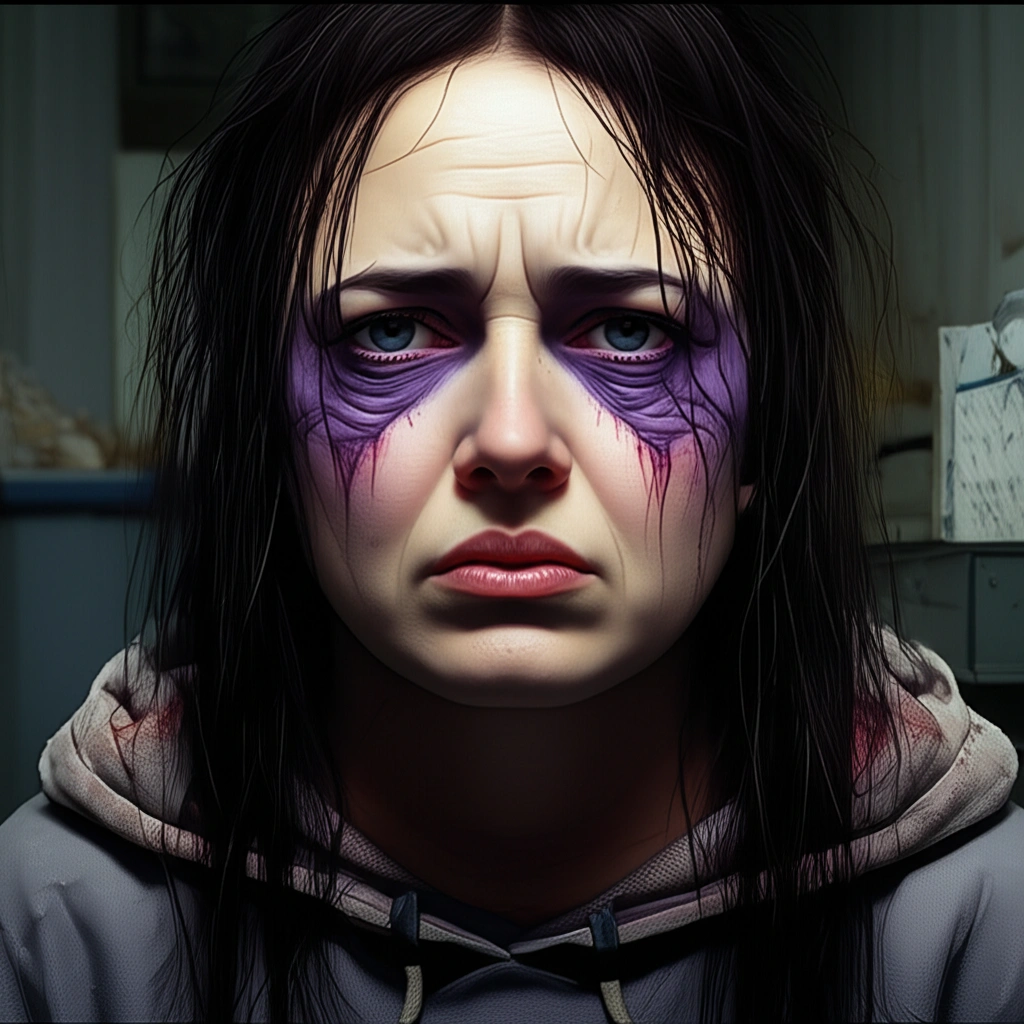
Sofia Miller