Chapter 7: Facing the Scarlet Cave
Chapter 7: Facing the Scarlet Cave
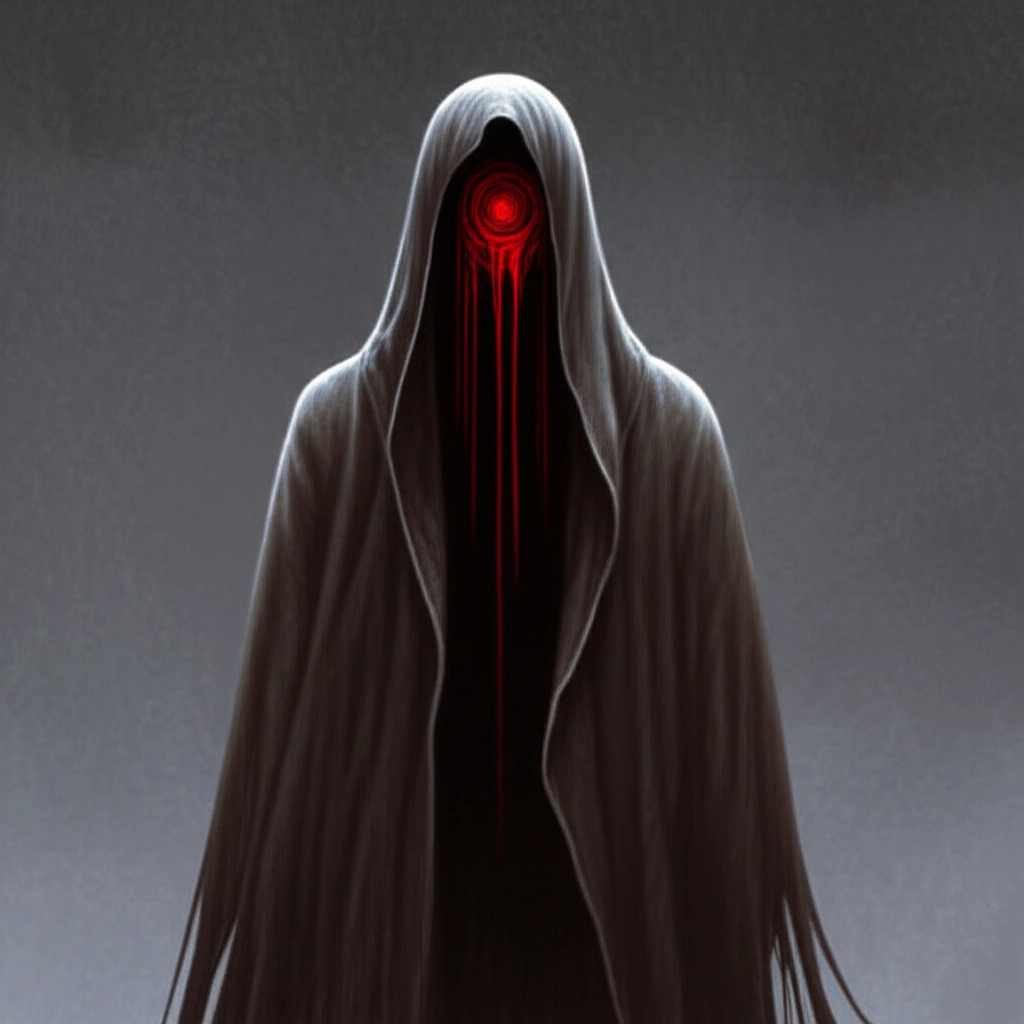
The Raincoat Man stood in the center of Sofia’s world, a pillar of darkness in the dying light. The cold he emanated was a living thing, seeping into the floorboards, frosting the edges of the windowpane, and stealing the breath from her lungs. The air was thick with the phantom smells of damp earth and rust, the scent of an open grave.
He didn't move, but she could feel his attention focused on her, a pressure like a physical weight. The scarlet cave of his face pulsed with a soft, internal light, a wound that glowed with all the pain she had tried to drown for seven years.
Her survival instinct screamed at her to run, to throw the book at him, to claw her way out onto the fire escape. But she was done running. Her fear was still a live current in her veins, but for the first time, it was overlaid with a cold, clear purpose. She held the pen like a weapon, her only weapon, and lowered her gaze back to the page.
…the words don’t exist for the kind of tired that gets into your bones.
As she wrote, a sound slithered from the void where his mouth should have been. It was a wet, gurgling whisper, a horrible parody of her father's deep, gentle voice, as if spoken through a throat full of blood.
“Disappointment,” the voice rasped, the word dripping with a familiar, weary contempt she had always dreaded. “Always such a disappointment. Couldn’t even finish your degree. Look at you. A pathetic junkie, writing lies for pocket change.”
The words were darts, tipped with a poison distilled from her own deepest insecurities. They struck home, and for a second, her hand faltered. He was right. She was all of those things.
But then she looked at the sentence she had just written. It wasn't a lie. It was a guess, an attempt at empathy. It was more truth than she had allowed herself in years. She tightened her grip on the pen and pushed it across the paper, the scratching sound a defiant retort.
I know you were tired. I was just a kid. I didn’t understand.
The entity took a slow, dragging step forward, the sound like stone grinding on stone. “You understand nothing. You let that coward in the email die. You helped him. Just like you helped me.”
The phantom pressure around her neck tightened, a ghostly echo of Brandon's noose. The accusation hung in the air, heavy and true. She had been a coward. She had chosen herself over a stranger's life.
I was scared, she wrote, the confession flowing from the ink, stark and honest. I’m always scared.
“You write fairy tales for grieving mothers while you can’t even face your own truth,” the voice hissed, and he took another step. He was closer now, looming over the coffee table, a monolith of grief and rage. “You carve flowers into children, but you won't look at my face. LOOK AT ME!”
The command was a physical force, a psychic shove that snapped her head up. She met the horrifying visage head-on. The pulsing, bloody abyss was mesmerizing in its grotesquery, chunks of gore clinging to the edges. It was the last thing her father had ever seen. It was the image she had built her life around avoiding.
And in its depths, she saw not just his pain, but her own. A reflection of seven years of self-hatred, of guilt, of a grief so profound it had become her entire identity.
His gloved hand shot out, not to strike her, but to slam down on the notebook, pinning it to the table. The impact was jarring, the cold from his touch seeping through the pages.
“You weren’t enough,” the voice whispered, its tone now laced with a cruel, intimate sorrow. “Did you know that? Your mother leaving, that was one thing. But you… you were supposed to be the reason to stay. And you weren't enough.”
This was the core of it all. The deepest, most poisonous root of her trauma. The belief that if she had just been better, smarter, quieter, more, he would still be here. A tear, hot and sharp, escaped her eye and splashed onto the back of his cold, leathery glove. It sizzled like water on a hot plate.
The entity recoiled slightly, a low hiss emanating from the wound.
Her tear had hurt him. Her genuine pain, her genuine grief, was a weapon against the specter born of her guilt.
A fierce, desperate strength surged through her. This thing fed on her self-loathing, on the lies she told herself. The only way to starve it was with the truth. The real truth. Not a comforting fiction, but the hard, ugly, and liberating truth she needed to survive.
With her free hand, she grabbed his wrist. The glove was freezing, unnaturally solid, like gripping a frozen piece of meat. She shoved, and with a surge of adrenaline-fueled strength, she pushed his hand off her notebook.
He staggered back, seemingly surprised by her defiance.
She hunched over the page, the pen flying now, words pouring out of her not as a letter from him, but a letter to him. A final conversation.
It wasn’t about me, she wrote, the words a revelation. You were sick. You were in a pain I couldn’t see, a darkness I couldn’t light up for you. It wasn't my job to save you. It was my job to love you, and I did.
“LIAR!” the entity roared, and the room shook. The last of the light from the window shattered as if the pane had been broken. Plunged into near-total darkness, the only light was the sickening, red glow from his face. “YOU HATE ME FOR LEAVING YOU!”
Yes, she scrawled, the word messy, jagged. I hated you. I was so angry. You left me with this. With the silence. You were a coward.
She wrote the forbidden word, the one she had never dared to even think. And as the ink dried, she felt a chain break somewhere deep inside her.
The entity screamed, a high, unearthly shriek of agony. The form of the raincoat began to flicker and distort, the edges dissolving like smoke. The red light from his face pulsed erratically. He was coming apart.
She wasn't finished. There was one last thing to write. The hardest truth of all.
But I understand. And I forgive you.
She wrote the words, and as she did, she spoke them aloud into the suffocating darkness, her voice trembling but clear. “I forgive you.”
The specter convulsed. Its form collapsed inwards, the raincoat falling away to reveal nothing beneath it. The red wound, the scarlet cave, imploded with a wet, sickening pop, extinguishing its light and plunging the room into absolute blackness.
A wave of force, cold and silent, rushed past her, and then it was gone.
Silence.
A pure, clean, empty silence.
Sofia sat in the dark, her body trembling with exhaustion and release. The oppressive weight was gone. The smell of blood and earth had vanished, replaced by the familiar scent of dust and old paper.
Slowly, tentatively, the first grey fingers of dawn began to creep through the window, illuminating the scene. The room was a wreck. The dresser was smashed. The closet door lay splintered in the middle of the floor.
But she was alone.
She looked down at her arm. The deep purple handprint, the brand from the subway, had vanished. Her skin was pale and clear. She touched her neck; the shadowy rope burns were gone.
On the coffee table lay the notebook. The final page was filled with her frantic, tear-stained scrawl. It was her declaration of independence. Her closure.
Sofia leaned back against the couch, the pen slipping from her numb fingers. Outside, the city was waking up. A new day was beginning. For the first time in seven years, she felt like she might be able to face it. The ghosts were gone. She had faced the scarlet cave, and she had survived.
Characters
Sofia Miller